
Field Notes #2
Week of December 29, 2025
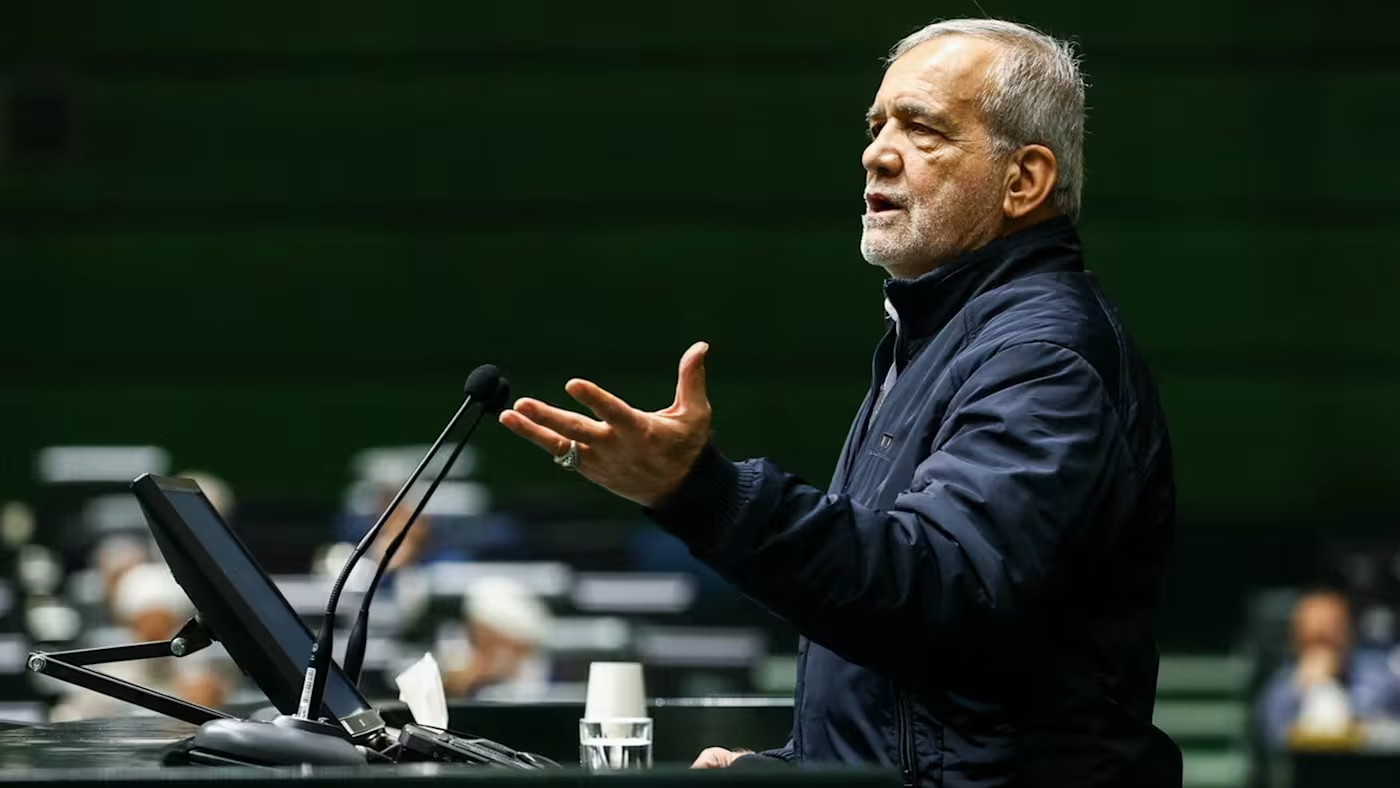
Iranian President Masoud Pezeshkian has stated that Iran is in a “full-scale war” with the United States, Israel, and the European Union. Western media treated this as bombshell breaking news–a prelude to imminent escalations, yet notably absent were any signs of troop mobilizations, parliamentary votes, and most significantly, attacks on U.S. assets in Iraq, Syria, or the Persian Gulf.
Pezeshkian’s statement was given in an interview published on Iranian Supreme Leader Ayatollah Ali Khamenei’s website December 27, 2025, with Pezeshkian framing the conflicts as already underway saying, “In my opinion, we are in a full-fledged war with America, Israel, and Europe; they do not want our country to stand on its feet.” The timing of this statement is worth noting as they arrived just days before Israeli Prime Minister Benjamin Netanyahu traveled to Mar-a-Largo for a meeting with U.S. President Donald Trump where the two discussed the ongoing war in Palestine and Israel’s strategy moving forward. Western media outlets immediately latched on to the full-scale wording of the announcement with publications such as Newsweek running headlines which read “Iran Military Vows to Crush Enemies After President Says at ‘War’ with US.”
The current escalation cycle began in earnest in the spring of 2024 when Israel bombed the Iranian consulate in Damascus, killing several high-ranking Iranian officials in the process. In response, Iran’s IRGC began seizing Israeli owned or operated cargo ships traveling in the Persian Gulf. What followed was a year-long campaign of proxy warfare and a number of assassinations of Iran’s top military leadership marking the most direct confrontation between the two states in decades. The result was the imposition of snapback sanctions in the fall of 2025 which targeted the Iranian Ministry of Defense for its failure to fully give in to U.S. pressures to dismantle their nuclear program. The effects have been immediate and severe. As of December 2025, the Iranian rial has lost nearly 40 percent of its value and inflation in the country has surged to 42.2 percent year over year, pushing up the cost of everyday living expenses.
Just four days after Pezeshkian’s statement, protests erupted in and around Tehran, with demonstrators explicitly rallying against the cost of living crisis that has gripped the country since September’s sanctions. Thousands of citizens across 17 of Iran’s 31 provinces had taken to the street demanding economic relief. Now in its seventh day, Iranian security forces have responded to the protests with a number of arrests and heavy police presence in some areas of the country, and at least seven people have been reported killed. The timing of the civil unrest is unlikely to be coincidental as economic pressure campaigns are intended to produce precisely this outcome.
So if this isn’t a declaration of war, then what would one actually look like? Traditionally, declarations of war are a formal, legislative act. They involve parliamentary votes, mobilization orders, the severance of diplomatic relations, overt and explicit threats, and ultimatums–legal instruments that ultimately shift a state’s posture from peace to war. Iran did none of this. Iranian parliament held no vote, the IRGC issued no mobilization orders, and Iranian diplomats remain at their posts. What Tehran did instead was name an already existing condition, one that Western powers have been engineering for months, if not years. Put simply, Pezeshkian called economic strangulation and covert operations what they are: warfare.
Sanctions are routinely described as an “alternative to war,” but history tells a different story. Take for example Venezuela, targeted by U.S. oil and financial sanctions since 2017, saw inflation peak at 300,000 percent in 2019 and a loss of nearly 75 percent of the nation’s GDP, and a political crisis that continues to unfold. Syria is similarly an example of this effect. Once Syria was hit with the largest most aggressive sanctions regime applied to the country in 2020, it crippled the Syrian economy and devastated Syrian society. The formula is consistent: economic strangulation intended to produce domestic unrest which creates a crisis of legitimacy and ultimately justifies Western intervention.
Traditional warfare had clear boundaries: a declaration marked by a clear beginning, middle, and treaties or surrender marked the end. Twenty-first-century conflict operates differently—continuous pressure across economic, cyber, information, and proxy domains, with no formal start date and no clear combatant status. Sanctions aren't pre-war; they are war, fought in bond markets and currency exchanges instead of battlefields. Iran's statement isn't so much a threat to begin hostilities as it is a recognition that hostilities are already underway, and have been for years. If economic coercion constitutes warfare, what does that mean for international law, which still assumes war is something you declare? What does it mean for neutrality, for sovereignty, for the very definition of "peacetime"?
Tehran's options are narrowing. It can endure, but for how long before economic collapse triggers revolution or state fracture? It can escalate, but into what? A hot war with Israel and the U.S. it cannot win? More regional proxy conflicts that further justify Western intervention? Or it can negotiate, but with whom, what entity and from what position of leverage? The "war as condition" framing suggests there may be no exit, only attrition, until one side breaks, or miscalculates into something worse.
Tehran's statement isn't a threat—it's a clear-eyed assessment. The question isn't whether Iran will "start" a war with the West, but whether the war already underway will force Iran into the kind of dramatic escalation that justifies the intervention Western powers have been engineering all along.
Also This Week...
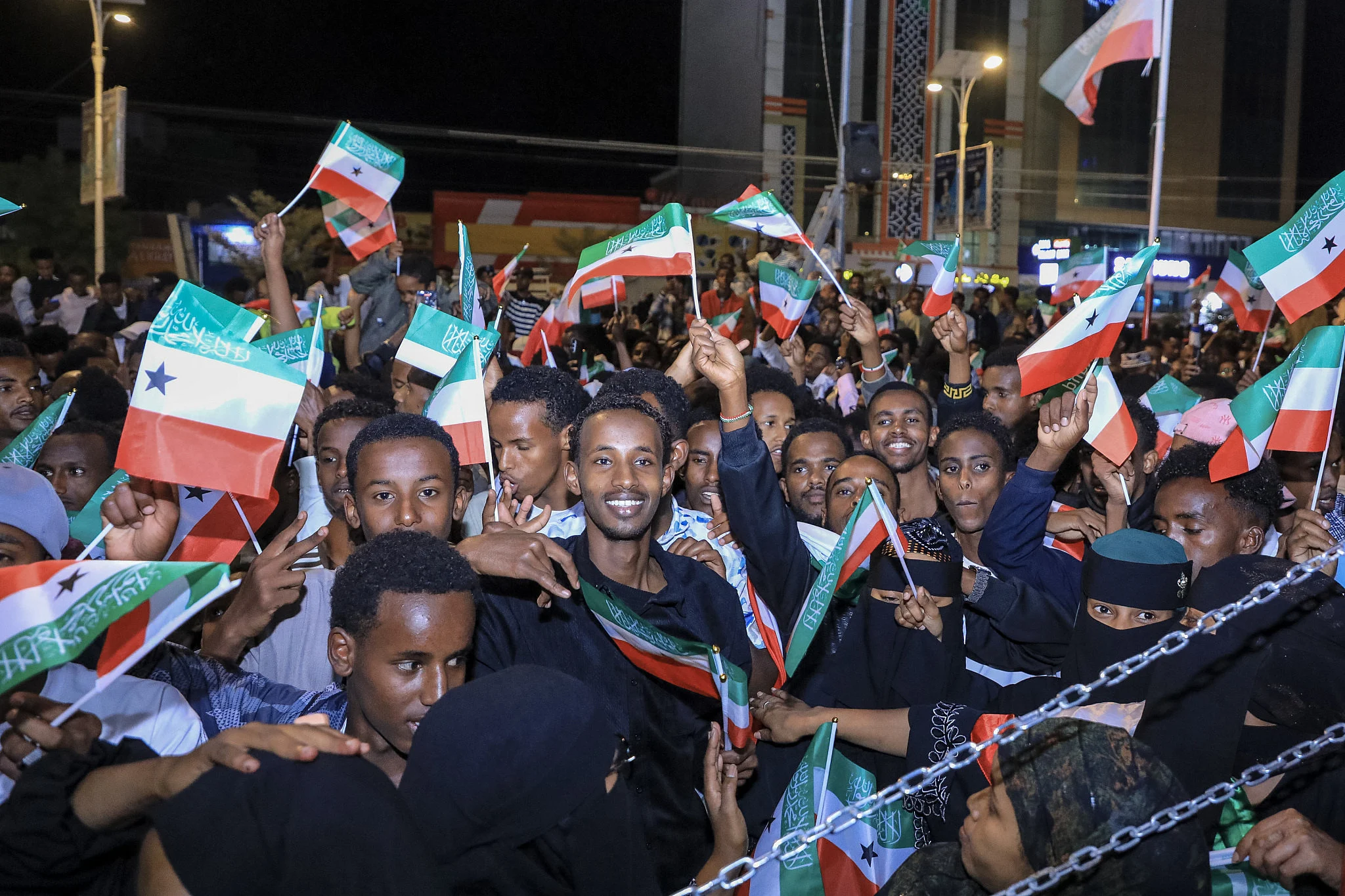
Israel surprised analysts by being the first and only nation in the world to formally recognize Somaliland, the break away region of Somalia, on December 26, 2025. Recognition was framed as an extension of 2020’s Abraham Accords in which Israel pledged to forge diplomatic relations with its Arab and Muslim-majority neighbors, but geography tells a different story.
Israeli officials approached Somaliland in March 2025 with a proposal to house displaced Palestinians from Gaza, though Somaliland has denied that recognition was conditioned on accepting refugees. Regardless, the move has drawn condemnation from at least 20 Muslim-majority and African nations. Somalia's president Hassan Sheikh Mohamud warned that Israel would "export its problems in Gaza and open a box of evils in the world."
Somaliland sits directly across the Gulf of Aden from Yemen, where Israel has been conducting strikes against Houthi forces since their 2023 Red Sea blockade. The U.S., France, UK, Japan, Italy, Spain, China, and Saudi Arabia all maintain military facilities in the broader Horn of Africa region, concentrated largely in Djibouti. Somaliland represents uncontested real estate adjacent to one of the world's most militarized maritime choke points.
This isn't diplomatic outreach—it's forward positioning. Recognition gives Israel a potential foothold for intelligence operations, naval logistics, or direct military access directly opposite the Houthi-controlled Yemeni coast. Whether that takes the form of intelligence-sharing agreements, port access, or permanent facilities remains to be seen. But in a region already crowded with great power competition, Israel's entry shifts calculations for Saudi Arabia, the UAE, Turkey, and Egypt—all of whom have stakes in Red Sea security.
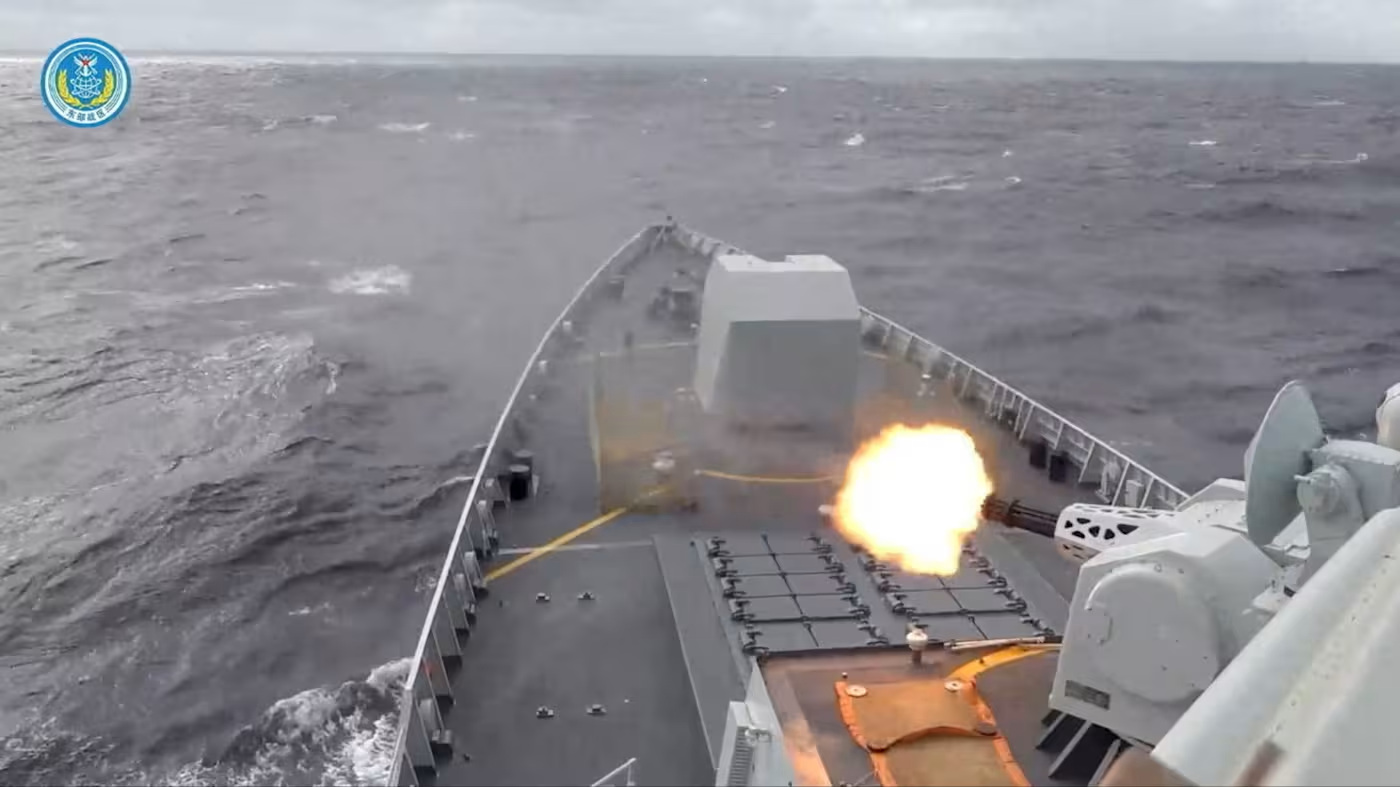
China’s People’s Liberation Army conducted two days of live-fire military drills around Taiwan this week, deploying 89 aircraft and drones, 14 naval vessels, and simulated a blockade of Taiwan’s ports. Beijing has dubbed the drills “Justice Mission 2025,” framing the exercises as a response to “external interference.”
Japan’s newly appointed Prime Minister, Sane Takaichi, publicly suggested back in November of 2025 that Tokyo would respond militarily if China were to act on Taiwan. Takaichi’s statements mark a significant departure from Japan’s post-WWII defense policy, which constitutionally restricts military action to self-defence. President Trump, however, claimed that he was not warned of the military drills ahead of time and ultimately was not concerned, claiming he did not believe that Xi Jinping wants to “attack Taiwan.”
The drills themselves are routine, Beijing has conducted similar exercises annually since 2020. What's noteworthy is the escalatory rhythm: U.S. arms packages trigger Chinese drills, which justify Japanese military expansion, which sets the stage for the next U.S. package. U.S. intelligence assesses that XI has directed the PLA to achieve the capability to take Taiwan by force by 2027, though Xi has not set a timeline and public states his preferences for peaceful reunification.