
Field Notes #1
Week of December 22, 2025

Tensions escalate in the Caribbean as U.S. forces seize three Venezuelan oil tankers in 11 days. On December 10, U.S. forces intercepted and seized the Venezuelan oil tanker Skipper in the Caribbean,. The second ship, the Panamanian-flagged Centuries, was similarly seized December 20, carrying 1.8 million barrels of crude oil. Now, the Bella 1, the most recent target of U.S. forces, has also seized. The seizure of the Centuries marked a stark escalation as the ship was not on the list of sanctioned vessels. The U.S.’s actions in the Caribbean clearly demonstrate that the blockade announced on Dec. 17 is now fully operational.
The Skipper, seized Dec. 10 by U.S Coast Guard members, flown in on helicopters from the USS Gerald R. Ford was carrying approximately 2 million barrels of sanctioned crude oil valued at around $100-120 million. A week later, after the announcement of a “total and complete” blockade of all ships coming in and out of Venezuela, the vessel Centuries, an unsanctioned China-bound vessel was boarded by U.S. forces and detained, despite not having a warrant to do so as it did with the previous vessel, most likely under the pretense of a “right to visit” maritime law. Most recently, the Dec. 22 seizure of the Bella 1 oil tanker, an empty vessel headed towards Venezuela, marked the third such seizure thus far. It is unclear what will happen to the seized tankers and the oil within them but when viewed collectively reveals a pattern of complete piracy–whether they be sanctioned or unsanctioned vessels, full loaded or empty, all vessels in the region are potentially a target.
The tanker seizures represent the first use of direct military action against Venezuelan sovereign assets, but follows a months-long pattern of escalation. Shortly after taking office in January 2025, Trump signed executive orders designating eight Latin American criminal organizations—including MS-13 and Tren de Aragua—as foreign terrorist organizations, alleging Venezuelan government support. By late summer, three guided-missile destroyers had deployed near Venezuelan waters under the pretext of counter-narcotics operations. The military presence expanded rapidly. Within weeks, the deployment grew to include three amphibious assault ships carrying approximately 6,000 troops—the largest U.S. military presence in the Caribbean since the Cold War. In early fall, forces conducted the first strikes against alleged "drug boats" linked to Tren de Aragua. As of December 18, the campaign has produced over two dozen strikes killing 104 people, with the administration refusing congressional and UN requests for legal justification.
The December 17 blockade announcement formalized what the first tanker seizure made explicit: this operation extends far beyond counter-narcotics–a fact highlighted by the fact that the Centuries isn’t even on the list of vessels sanctioned by the U.S.
It is no secret that Venezuela holds the world's largest proven oil reserves at over 300 billion barrels. The Trump administration has never concealed its interest in these resources. During his first term, Trump pressured opposition leader Juan Guaidó to grant U.S. companies access to Venezuelan oil during the 2019 presidential crisis. The current opposition leader, María Corina Machado—awarded the Nobel Peace Prize in October 2025 amid significant controversy—has signaled a similar willingness to accommodate U.S. interests.
In a video call with business leaders and Trump himself, Machado framed regime change as an investment opportunity saying, "We will open all, upstream, midstream, downstream, to all companies. I am talking about a $1.7 trillion opportunity." The statement reveals what the tanker seizures confirm: this is resource extraction dressed as counter-terrorism.
The blockade strategy follows predictable logic. Oil accounts for 88 percent of Venezuela's $24 billion in annual export revenue. Severing this lifeline aims to create economic conditions severe enough to trigger regime collapse. The Trump administration—despite campaigning as anti-interventionist—has clearly reverted to Monroe Doctrine tactics, rebranding hemispheric dominance as drug interdiction.
The China dimension at play here cannot be ignored and provides an additional layer of complexity. All three tankers sized thus far were either China-bound or China-involved in one way or another. Additionally, China serves as Venezuela’s largest export market. It is apparent that the U.S. is simultaneously trying to achieve two things at once here: firstly, place a tremendous amount of pressure on the Maduro government in order to foment regime-change and secondly, disrupt Beijing’s key energy partnerships in Latin America in order to complicate their access to critical resources.
The Venezuelan oil blockade strips away any pretense of humanitarian or security concerns. This is about gaining access to the world’s largest oil reserve, period. Yet in spite of the military encirclement and economic warfare, diplomatic channels remain open, though the window narrows with each strike, each seizure, and each day the blockade persists.
Also This Week...
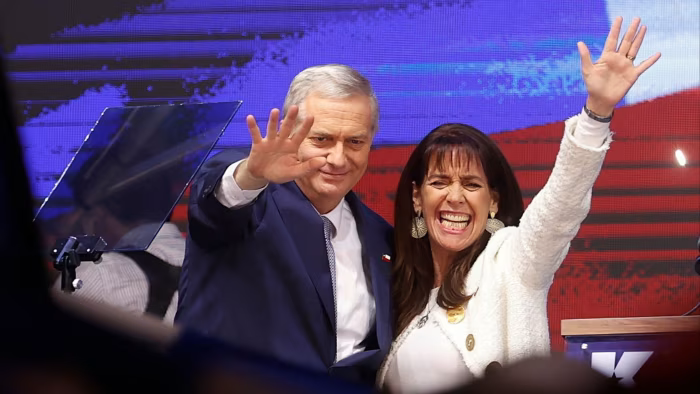
Chile joined Latin America’s rightist realignment December 14 when far-right candidate Jose Antonio Kast won the presidential runoff with 58.2 percent of the vote, defeating leftist Jeannette Jara.
The 59-year-old Kast, son of a German Nazi Party official who emigrated to Chile after World War II and ardent admirer of former Chilean dictator Pinochet, ran on a Trumpian-style “Law and Order” campaign. His platform vows to fortify the nation’s border with Peru and Bolivia, expelling some 380,000 undocumented migrants in the process. Moreover, Kast has pledged to amplify police and military presence in “high-crime” areas, and impose mandatory minimum sentences, despite statistics showing that Chile is one of the safest nations in the region. On economics, Kast has promised major neoliberal reforms such as a $6 billion tax cut in the first 18 months of his presidency, while claiming that social spending will remain untouched, an argument that many officials claim to be mathematically impossible. Kast assumes office March 11, 2026.
Notably, Chile serves as the world’s largest producer of copper and is the second largest lithium miner, with China as its primary export market. How Kast will navigate trade relations will certainly test those economic promises, particularly considering the keen U.S. interest in securing access to these critical minerals as competition with China intensifies. U.S. Secretary of State Marco Rubio congratulated Kast by phone within hours of his victory, emphasizing U.S. security and economic commitments–a clear sign that Washington is eager to establish preferential treatment as a part of the deal.
Kast's victory accelerates a regional pattern. Centrist Rodrigo Paz ended nearly two decades of socialist rule in Bolivia in October. Argentine President Javier Milei's party won decisive congressional victories that same month. El Salvador's Nayib Bukele has consolidated authoritarian control since 2019. Today, Honduras has declared Trump-backed Nasry Asfura the winner of its contested November election–winning by just a .74 percent margin amid widespread allegations of fraud and calls for a recount.
The coordination is explicit. Just two days after his victory, Kast flew to Buenos Aires for his first foreign meeting with Milei at Casa Rosada, promptly celebrating Kast’s victory via social media tweeting a map of South America with the caption “THE LEFT IS RETREATING, FREEDOM IS ADVANCING.” Thus, when taken together, these governments form a conservative bloc aligned with Western—particularly U.S.—business interests at precisely the moment Washington is recalibrating foreign policy toward Latin America. Chile's copper, Bolivia's lithium reserves, Argentina's agricultural exports, and regional alignment on migration and security create a constellation of U.S.-friendly governments that didn't exist just two years ago.
Through coordination and international finance the regional realignment serves Washington's hemispheric strategy as clearly as any Monroe Doctrine revival. This was exemplified in the Trump administration’s $20 billion bailout in October of this year, preventing a currency run on the Argentine Peso. The pattern is clear, align with Trump on migration, security, and most importantly resource access, and Washington will provide financial support.
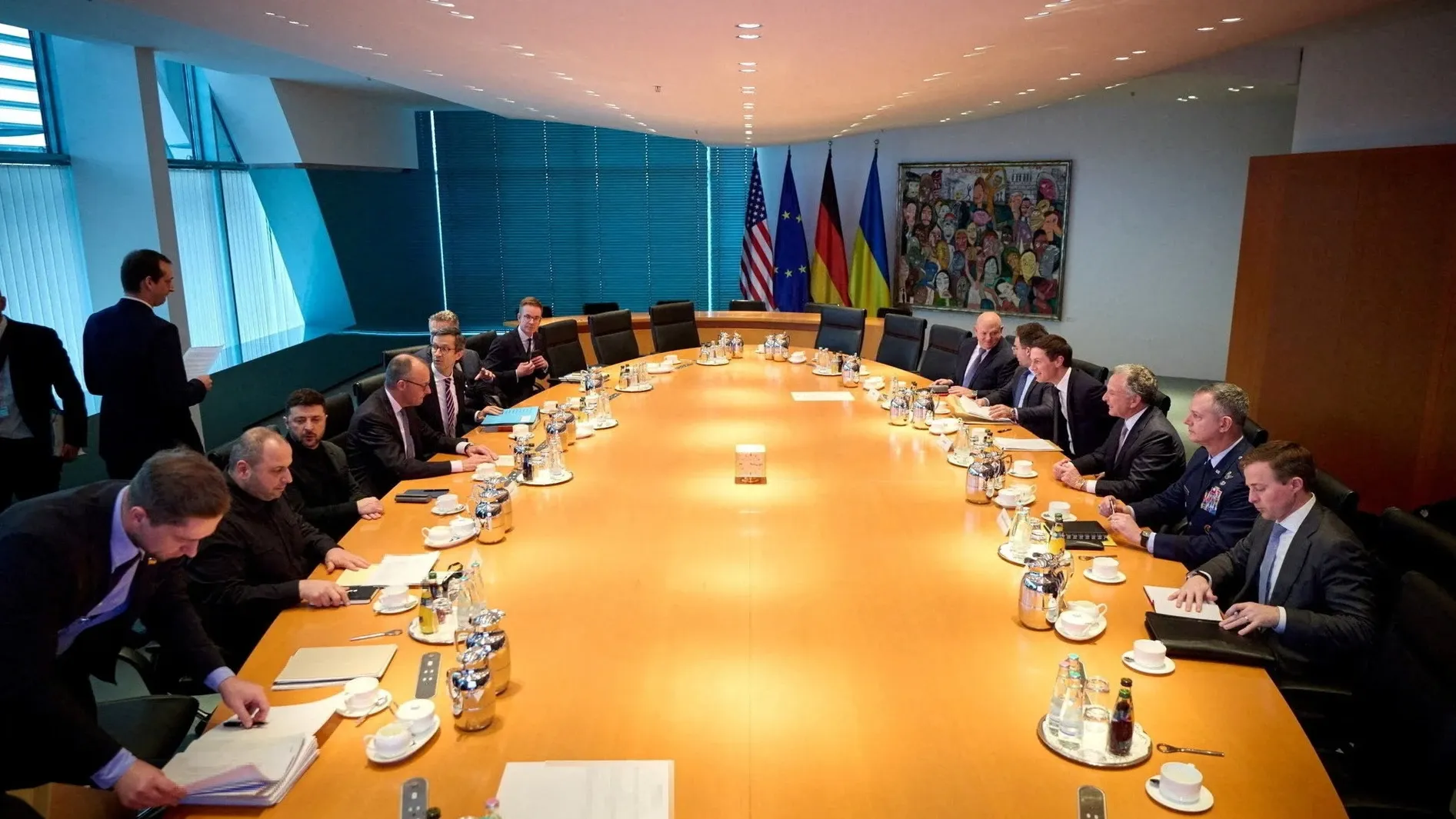
Ukrainian President Volodymyr Zelenskyy meets Donald Trump at Mar-a-Lago Sunday in what both sides describe as a potentially decisive moment for ending Russia's war. The meeting comes as Zelenskyy unveiled his most significant territorial concession yet: withdrawing Ukrainian troops from contested areas of Donbas to create a demilitarized zone, contingent on Russia doing the same.
The DMZ proposal emerged from two weeks of intensive negotiations that began December 14-15 in Berlin, where Zelenskyy dropped Ukraine's constitutional NATO ambition in exchange for "Article 5-like" bilateral security guarantees from the U.S., European partners, Canada, and Japan. Trump envoy Steve Witkoff and presidential son-in-law Jared Kushner led talks that produced a 20-point framework now awaiting final approval.
In a December 24 briefing with journalists, Zelenskyy revealed details of the territorial compromise: Ukraine would pull back from remaining portions of Donbas under Kyiv's control if Russia withdraws an equivalent distance, creating a "free economic zone" monitored by international forces. A similar demilitarized buffer would surround the Zaporizhzhia nuclear plant, under Russian control since early 2022. The plan requires a 60-day ceasefire to hold a referendum on any final territorial arrangement. Zelenskyy says the U.S. and Ukraine have reached "90 percent consensus," though Points 12 (Zaporizhzhia) and 14 (Donbas territory) remain unresolved.
Russia's response has been guarded. Putin was briefed Christmas Day and is "formulating a position," according to Kremlin spokesman Dmitry Peskov. Deputy Foreign Minister Sergey Ryabkov accused Ukraine of attempting to "torpedo" negotiations, claiming the revised plan differs "radically" from what Moscow negotiated with Washington. Putin rejected Zelenskyy's Christmas ceasefire proposal and continues daily strikes on Ukrainian energy infrastructure and cities—military pressure designed to extract maximum concessions before any deal closes.
Zelenskyy's DMZ proposal acknowledges what many Western analysts long denied: NATO expansion, not Russian imperialism, drove this conflict. For decades, Moscow warned that absorbing Ukraine into the Western military alliance would cross a red line. The 2008 Bucharest Summit's promise of eventual NATO membership for Ukraine, followed by the 2014 Western-backed overthrow of Ukraine's elected government, created the conditions for confrontation. Kyiv's constitutional commitment to NATO membership—enshrined in 2019 under Western pressure—made diplomatic resolution impossible.
The proposed demilitarized zone represents Washington's recognition of overreach, but also an attempt to maintain influence without the formal alliance structure that provoked Russian intervention. Whether Moscow accepts Western-monitored buffers on Ukrainian soil remains unclear. Putin has demanded full control of Donbas—territories that voted overwhelmingly for closer Russian ties before the 2014 Maidan coup. The DMZ compromise, similar to Korea's 1953 armistice line, would freeze the conflict rather than resolve underlying tensions about Ukraine's geopolitical orientation.
Sunday's Mar-a-Lago meeting carries urgency because Trump wants a deal "before the New Year"—five days away. Secretary of State Marco Rubio's recent dismissal of the conflict as "not our war...it's a war on another continent" signals Washington's eagerness to extract itself regardless of terms. After nearly three years of proxy war that devastated Ukraine while enriching Western defense contractors, diplomacy accelerates not from goodwill but from battlefield realities: Ukraine's position has deteriorated, European populations have tired of funding an unwinnable conflict, and Trump wants a foreign policy "win" before his second term begins. The real question is whether the U.S. can abandon its three-decade project of encircling Russia, or whether the DMZ simply represents a tactical pause before the next phase of containment.